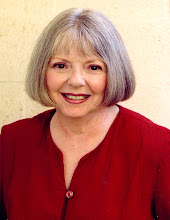
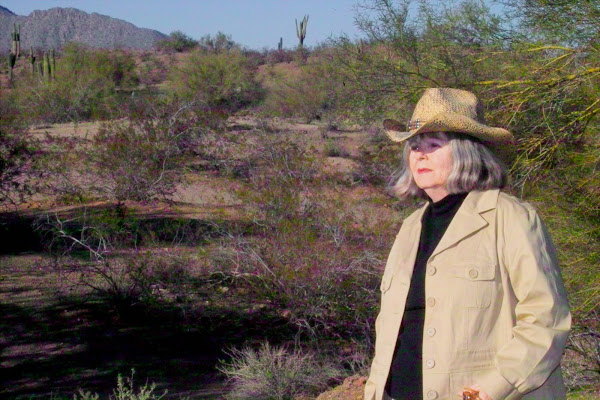
The husband and wife team of Mary Reed and Eric Mayer published several short John the Eunuch detections in mystery anthologies and in Ellery Queen Mystery Magazine prior to 1999's highly acclaimed first full length novel, One For Sorrow. Their protagonist's adventures continued in Two For Joy (2000), a Glyph Award winner in the Best Mystery category. Two For Joy also gained an Honorable Mention in the Glyph Best Book Award list and in addition was afinalist for the IPPY Best Mystery Award. Three For A Letter (2001), Four For A Boy (2003), and Five For Silver (2004)followed. The latter two novels were nominees for the Bruce Alexander History Mystery Award. Five For Silver won the 2005 Glyph Award for Best Book Series. In June 2003 the American Library Association's Booklist Magazine named the John the
Eunuch novels as one of its four Best Little Known Series. Their most recent novel is Six For Gold. Seven For A Secret has just been released (April 2008).
Betty Webb's interview with Mary Reed
Betty: Your John the Eunuch series is -- to put it mildly -- unusual. In a day where sexy heroes and heroines and the standard, you've actually got a guy with no, um... ? Tell me when the idea for him came to you and why you decided to risk it.
Mary: Strange to relate, it was as the result of a very tight deadline. Mike Ashley was organizing an anthology devoted to historical mysteries and rang us up one afternoon to ask if we'd care to contribute. Naturally we said yes. The snag was it had to be researched, a plot constructed, and written in less than a month. And the first question to be addressed was what era would be suitable? Eric is interested in the Byzantine period and had a number of books about it, so the
research material was already to hand. But then who would be our protagonist? Well, we decided to make our sleuth Emperor Justinian's Lord Chamberlain, making John a powerful man in his role as Justinian's advisor. Many men of high rank at the time were eunuchs, so John was also set among their ranks -- but we also made him a man who had been a mercenary before being captured and wounded so badly, so he is able to take care of himself and those he cares about. He is not at all the conventional notion of a eunuch as a simpering, effeminate, chubby fellow with a treachorous nature, and in fact dislikes such eunuchs intensely. Given all this angst it is no
wonder he occasionally has bouts of black rage, which most of the time he keeps controlled, presenting what we would call a poker face to the world. The court was officially Christian, so John was given another burden, that of worshiping Mithra, as did many military men. Exposure of his religion could well mean execution so this is something else lurking in the background. To add to his difficulties, Empress Theodora hates him and would like to see his head separated from his shoulders, so between that and his proscribed religion, not to mention court intrigues and ever present danger on the streets, John is a man who has power and wealth and yet is
in as precarious a position as any beggar.
Betty: Did you have trouble selling a novel based on such a hero?
Mary: Oddly enough, no. How it came about was one of those instances where luck played a part in publishing, which happens more often than some writers will admit. Some years ago the MWA newsletter mentioned Poisoned Pen Press had been nominated for a 1998 Edgar for their A-Z Murder Goes...Classic. PPP was a fairly new venture at the time and in writing to congratulate them on their nomination we boldly asked if they also published fiction. It turned out editor in chief Barbara Peters had only recently been complaining about a lack of mysteries set in the Byzantine era. Aha, we said, we have a manuscript with that very setting, would you be interested? The press asked us to send it and it was accepted within a few weeks. In the event some rewriting was needed before it became the first original work of fiction they published,appearing in 1999. It should be pointed out, though, that we're talking about what was then a small publisher. Whether we could have interested a major publisher is hard to say.
Betty: Your method of working is also unusual. Tell me how you and Eric work.
Mary: We begin by batting ideas around. There are always some floating about unused anyway so it isn't hard to come up with them, but the question is whether they are any good -- and whether they are sufficiently different from what we've done in previous books. Once we decide on what the story will be about in general terms -- the model for the girl in John's wall mosaic shows up or he is sent to Egypt to find out why sheep are committing suicide, or has to investigate a murder during a plague -- we start outlining and researching. Those two things fuel each other. We start looking up what we need to know for the parts of the story we already have in mind, and as we read we come across things we didn't know, which suggest new avenues for the story to follow. We discuss and exchange notes and outline revisions until we have a scene by scene outline. Of course, as we write the outline can change drastically but at least we have something to go on. Once we have the outline we begin writing individual scenes. Sometimes I will write the first draft and sometimes Eric will do that. We are often each writing the first draft of a different scene at the same time. Once the first draft is done by one of us it is sent straight across the office to the other, who then rewrites it and sends it back. We trade scenes back and forth until we are both satisfied. So we both, at some stage, write the whole book, which probably means we don't really save as much writing time by collaborating as one might think.
Betty: Do you two ever have spats over how a book (or chapter) should go? If so, how do you work it out? The creative temperament is notoriously testy.
Mary: Ya got that right! However, we agreed long since if one of us feels very strongly a certain scene should be in the novel it will remain, though it may be rewritten a little to address the concerns of the naysayer. Conversely if either of us feels a certain scene should not be in the novel it goes out. This situation does not happen too often, fortunately, although as Eric has been known to remark it helps if your doors have industrial strength hinges. However, it should be
noted that occasionally, when there is an impasse, we involve our editor in the discussion and, in effect, she gets the tie-breaking vote.
Betty: Seven For A Secret has been getting great buzz. Tell me about the book, how you came up with it, how it plays into the entire series, and how it's being accepted by the critics.
Mary: Seven For A Secret came about because we were always asking ourselves about someone depicted in the wall mosaic in John's study. We have, from book one, shown him confiding to the young girl pictured but we never explained, either to readers or ourselves, who the model for the figure had been. So this book answers that question. In addition, we wished to write a book in the
classic tradition, in which the detective pieces together the story behind the murder from his interviews with characters. We both prefer classic mysteries of this sort to action-packed books and we have always leaned towards the classic model. We wanted to really affirm that preference this time. Reviews have been excellent so far, including a starred review from Library Journal. For those interested there's a page of extracts at http://home.epix.net/~maywrite/sevrev.htm
Betty: About how many Eunuch books will there be in all? Do you foresee an end? Or a -- to use Hollywood terms -- a spin-off?
Mary: We'll keep writing them as long as readers want to read them! There are many adventures to be told, not only about John but also the lives of some of the supporting characters -- Felix, the excubitor captain, for example, and Isis, the Egyptian madam, though the one I have my eye on is Peter, John's aging servant. He's already dropped a few intriguing hints about his early life, you know.
Betty: Is there any other period of history you'd be interested in as a series setting?
Mary: Strange you should ask because in fact we have already written the first novel in what we hope will be a new series. It is currently on the market so we'd be very glad to hear from interested entities! It's set mainly in London in 1895. It is a mystery with a bit of woo woo but that's all we can reveal at this point.
Betty: Your books are very popular, yet you guys don't tour much (if at all). Want to address that?
Mary: We have concluded touring is not for us for a number of reasons, while occasional book signings have not been very productive. We've also noticed many writers have been experiencing the latter situation this past year or so by all accounts so we are not alone in our focus on online promotional efforts. There are many opportunities and new possibilities show up constantly. For example, during the past year or so there has been an explosion of author blogs, virtual tours, and book trailers. Then, too, online promotion suits our temperaments better. We have no ego and abhor "in your face" methods of promotion. We therefore practice the subtler sort. You won't see us tooting our horns in our newsletter (see, slipped a mention of Orphan Scrivener in there!) although we do have a section we dub Necessary Evil, wherein we mention such BSP as there is to hand. But this is usually short and always sandwiched between two essays -- we write one apiece each issue -- whose topics wander all over the landscape and quite often are nothing to do with John and his world or writing or publishing. Among other matters we have written about garden gnomes, wallpapering, the Newgate Calendar, Roman cabbages, and
detectives on stamps. Though we take our writing very seriously, we also invariably poke fun at ourselves, something not common in authorial newsletters. Thus our unfortunate subscribers never know what they will be reading next but we hope it will be entertaining at least.
Betty: Maybe you could give us some details about your online promotions.
Mary: It takes a fair bit of time but it helps when you have to be online to do your ordinary work anyhow! We go in for more subtle forms of promotion, the simplest form of which is signature lines. But not just any old siggy line! Each is written to fit the post above it by connecting comments made or the general topic in some way with the novel. Sometimes of course there isn't a connection, in which case the reader will be informed "(Title), guaranteed to be free of dancing rats", if twirling rodents were the topic of the post. So every signature line is different, and hopefully readers will be tempted to read each rather than sliding their gaze past them.
Contributing to elists is an important avenue for online promotion. But it's equally important to make certain something useful or interesting or thoughtful is contributed to the list, not just a flyby trailing a banner saying our novel is out, buy it now. This is insulting to the reader and does the writer no favors either. Finding comments to contribute is easy enough when we are talking about mysteries, because we are onlist as fans of same rather than only to publicize what we are
doing. Beyond that we contribute articles and reviews to appropriate venues, where the bio line promotes our works. Also interviews, such as this one! With so many magazines, review sites, and newsletters online the array of subjects to talk about is vast. Many are quite outside the areas of writing and mysteries, so pastures anew are ploughed that might otherwise lie fallow. With this sort of promotion we can share our ideas and knowledge with different segments of readers. For example, I am currently contributing occasional reviews for the Golden Age of Detection elist. They are archived on our website and also now appear on a British historical mystery site, but my signature line is merely my name and our website because if interest is raised that's the best place to provide information to the reader.
Well, then there's blogs. Eric has had one a while now but again writes about subjects all over the landscape and little about our writing as such -- but the book cover is there as a hint and a link to our website. Links are another way to get word out, exchanging them as well as asking they be listed on appropriate websites. This once led to a rather comical juxtaposition. A site devoted to Turkish travel gave us a link on the right side of the page and on the left was an ad for condoms...Then too virtual tours via blogging are increasingly popular, and so are guest blogs. We just did our first guest blog for Bev Myers, a fellow Poisoned Pen Press writer, a week or so back. Myspace and Youtube are getting a lot of attention right now. Author videos and trailers are the big thing at the moment and these are often mentioned as good sites to upload them, but my feeling is these sites have too high a noise level, and how does the individual author attract attention among the thousands of others there? Plus there is one aspect that can ruin the effort:
the unconsidered detail. For example, what if the accompanying music chosen is anathema to the viewer? Half a bar and they're out of there! But obviously other authors feel differently, so it is certainly an opportunity to consider.
Then there are e-newsletters. Our Orphan Scrivener is unusual in that it does not talk much about us but rather offers two essays an issue, again usually about topics unconnected with our writing (that's dealt with on our website, mentioned in the OS signature line) sandwiching such news as there might be. Newsletters can also be listed on other sites, just as we offer lists of mystery-related newsletters and author freebies on ours.
Speaking of freebies, they don't have to be physical entities. Ours is a reading guide to our series, provided on our website. Online freebies can be a challenge but besides reading guides or teaching online courses, mystery authors' sites offer such items as novel extracts, short stories, newsletters, serials, writing tips, recipes, and even a paper doll with appropriate outfits!
Opportunities to promote online are all over cyberspace if we can but see them. For example, many libraries list "if you like this book you will enjoy that one" or have bibliographies devoted to fiction dealing with specific topics. Generally we find a polite note asking if they would consider adding our series to their historical mystery list on their next update results in an obliging we will be happy to do so. And the same can be done with sites devoted to the location or subject of the work. The latter however is not something we go into. Our hero is a eunuch as is historically correct but we never emphasize the fact or go into great and gloating detail, an approach we find repugnant. There are many such men, often in this condition as the result of birth defects or, more commonly, war wounds so while there are certain avenues we could exploit in that line we won't do so. We treat John's condition in a matter of fact way, as he does, allowing him dignity despite the horror of what happened to him. So when writers complain they have problems promoting their work we just smile and say, well, try it with our protagonist!
Another example of what I think of as sideways promotion involves content not directly connected to our work. Our site offers libraries of free etexts of classic ghost and supernatural stories and Golden Age mysteries. It's time consuming tracing these etexts, especially as when I am looking them up I am always tempted to immediately read novels or short stories I have overlooked. For us it is a labor of love, but if someone is seeking this kind of reading these collections may well bring them to us and perhaps creates interest in our own work. If not, well, they've got other fine reading instead!
The website is a writer's most important resource. No matter where you live, it's there 24/7 and is useful in many ways beyond promotion. For example it can be used as a calling card when pitching projects or entered for awards. We've done both and it worked well. As you've doubtless gathered, we strive to offer content of a varied nature. So for example visitors can play Doom Cat (an interactive game written by Eric), assemble a jigsaw featuring the handsome cover of Five For Silver, or read about our protagonist's religion Mithraism. There's a bibliography of our scribbles, an archive of Orphan Scrivener newsletters, and Other Stuff. There is a lot more writers can do by way of online promotion, but this gives a good indication of the type of promotion we do for John and our other work.
Betty: What's up next for John?
Mary: We're thinking about that right now. While we have not got it completely wrestled to the ground yet, the eighth book will be set some years before Seven For A Secret, but taking place after the events of Four For A Boy, in which John first met Felix, captain of the excubitors, Isis, the Egyptian madam, and Anatolius, that feckless lad, but before One For Sorrow. It will be set during the Nika Riots, when Emperor Justinian was almost deposed. In keeping with our desire to give each book a slightly different feel, the next one will have a background more closely involving actual historical events than previous novels, while at the same time revealing more about how John and Felix came to be friends and how they rose to their current high positions.
Betty: You’ve give so much excellent, detailed advice that I almost hesitate to ask this next question, but heck, I will anyway. What other advice do you have for aspiring writers?
Mary: Advice for writers? Practice your craft, persist, and be patient and polite. Don't take rejection personally and above all keep your sense of humour well to the fore. You're going to need it!
If you’d like to learn more about Mary, Eric, and their creation, John the Eunuch, check their website at http://home.epix.net/~maywrite and Eric’s blog at http://journalscape.com/ericmayer
Sunday, April 27, 2008
Interview with mystery writers Mary Reed and Eric Mayer
Wednesday, March 26, 2008
Interview with Janette Rallison
From Betty: Although this blog is mainly dedicated to mystery writers and mystery writing, I’ve decided to make an occasional exception when my readers might gain something from an author who works in another genre. Since many mystery fans and authors are thinking about writing in the Y/A (Young Adult) field, I thought my friend Janette Rallison, a very successful Y/A writer who publishes under various names, would be the perfect person to start with.
Janette wrote her first story when she was six years old, but became serious about getting published when, as a young mother, she rediscovered that writing was much more fun than cleaning the house. Over the years, and countless dirty fridges later, she has published Playing the Field; All’s Fair in Love, War, and High School; Life, Love, and the Pursuit of Free Throws; Fame Glory, and Other Things on My To Do List; It’s a Mall World After All, How To Take the Ex Out Of Ex-boyfriend; and Revenge of the Cheerleaders, which is now in the bookstores. Janette’s children who keep her well supplied with plot ideas, sometimes even making cameo appearances in her novels. In fact, she attributes her long and successful writing career to complete avoidance of housework
Betty: Janette, how many genres have you written in?
Janette: I've written in romance (What the Doctor Ordered by Sierra St. James ), science fiction, (Time Riders by Sierra St. James) young adult fiction, (How to Take the Ex Out of Ex-Boy Friend) and I'm working on one right now that will be a young adult fantasy. But that said, really all of my books are romantic comedies. I like romance and humor so much that I always tuck those elements into my stories.
Betty: How long did it take you to get published?
Janette: I first published in 1996, and I was lucky. My manuscript was accepted to the first publisher I sent it to. But I'd been writing--learning and practicing the craft--since I was old enough to hold a pencil.
Betty: Why write in the first place?
Janette: Writers are always asked why we write. I think people are creative by nature and we look for ways to express ourselves. For some people it's scrapbooking or sewing or gardening. For me, it's inventing characters and spending months obsessing over details of their imagined lives. Yeah, I know, it sounds sort of insane, but it's more fun than doing housework.
Betty: What made you choose young adult fiction? Is there something particularly rewarding about young adult fiction that you don't find in, say, books about serial killers?
Janette: I write about teenagers for a couple of reasons. One is that I really believe kids need fun books--books that they want to read on their own, as opposed to most of the books they're forced to read in school. Kids can learn to love reading if you give them entertaining books. Also, writing about teenagers is fun. They're at such an emotional and vulnerable stage in life. It makes them the perfect subjects for comedy. For example, if a teenage girl is at a department store bra shopping and a couple of guys from her school walk by she will be mortified to the point that she will either a) dive under the pantyhose display to hide or b) transfer schools altogether. If an adult woman were in the same situation she would wave at the guys and tell them that Sears was having a great sale on underwear.
Betty: Are there any particular challenges in young adult fiction that you don't think you'd have in another genre?
Janette: One of the big challenges in young adult fiction is the fact that you have to have the main character solve their own problem. This makes some action/suspense stories hard to realistically pull off. In real life if some suspicious, creepy guy is stalking Tina Teenager she is going to tell her parents about it and they'd do everything to protect her. Ditto for the mysterious package that shows up on her doorstep. The parents would take care of it. Young adult writers have to find ways to take the parents out of the equation so the main character has to face down that villain themselves. This is why YA is populated with so many orphans. You also see a lot of single alcoholic moms. YA fiction is sort of a wasteland where parents are concerned.
Betty: Do you have an agent?
Janette: I have an agent, and I recommend that just about all writers get them. A good agent will not only know be able to circumvent the slush pile for you, but an agent will know which editors are looking for your kind of story. Plus contracts and royalty statements are written in some apparently foreign and undecipherable language, so it's good to have them to look over those. I found my agent because several people at my SCBWI (The Society of Children's Book Writers and Illustrators) writing group recommended her. Conferences are good places to find agents, plus they'll help you learn the writing craft better.
Betty: What is the largest market for your books?
Janette: I would say anyone who has a sense of humor, but most of my readers are teenage girls. I hear from a lot of teachers that kids who hate to read, love my books. I suppose it sort of makes me the Captain Underpants for teenage girls.
Betty: You have a big family. How long married, how many children?
Janette: I've been married for 22 years to the same wonderful guy. I'll never divorce him because he's the only one who can fix the computer. We have five kids, ages 20- 5 years old. We also have enough cats to qualify me for eccentric-cat-lady status. They've all been strays that the children adopt.
Typical scenario at my house:
Kids: Hey Mom, we found this new cat in our yard!
Me: Put it back. We're not keeping it.
Kids: We named it Peppermint!
Me: No, you didn't. It has no name because it's not ours.
Kids: Look, Peppermint is purring. She likes you.
Me: Shoo! Shoo! And stop shedding at once.
Yeah, that's pretty much how we've gotten five cats. And my husband is still speaking to me. (Didn't I tell you he was a nice guy?)
Betty: How do you balance your writing career with your busy family life?
Janette: The nice thing about writing is that it can be done in chunks during your free time. I've written a lot during gymnastic meets, soccer games, and nap time. On some days I've only been able to write a page or two, but if you can write just one page a day, you can produce a novel by the end of the year. My kids think it's pretty cool that I'm a writer. My oldest daughter gave me a lot of plot ideas--generally things that were happening at her high school. ("Mom, you'll never guess what Rochelle did. You've got to put it in a book.) My younger kids like naming the bad guys after people they know.
Betty: Have you thought about exploring any new genres?
Janette: Oh yeah. Authors get ideas for all sorts of different genres. I'm itching to do more fantasy--and I'm a hopeless romantic--so I'm sure I'll do that genre again sometime, and I'd like to see if I could do action too. I don't think I'll ever write horror though. The thing that a lot of readers don't understand is that it takes a long time to write scenes and the author has to vicariously live through the emotions of the main character to make the scene realistic. It might take a person a few minutes to read a chapter--but the author lived that chapter for perhaps weeks. It's bad enough writing sad scenes. You're at the computer sobbing for no apparent reason, which is something that people don't understand when they call to remind you that your son has Boy Scouts at 7:00 that night.
Betty: Hmm. I notice you didn’t mention mystery.
Janette: Actually the fantasy I just turned in has a mystery in it. It's not a “high fantasy,” though. It's about a girl from our day who has an incompetent fairy godmother who misunderstands her wish and sends her back to the Middle Ages. There is a mysterious black knight who has beaten all of the country's knights and has been challenging the prince. No one knows who he is or what he really wants and the heroine has to figure it out before the king decides to use her as bait to find out the knight's identity. That sounds kind of weird, but it makes sense in the novel.
Betty: What's the next book we can expect to see from you?
Janette: I have two coming out in 2009 and I'm not sure which will come out first. There’s the fantasy novel I just told you about, working title A Fairy Godmother's Guide to Saving Troubled Teens. The second book is called Just One More Wish and it's about a girl whose brother has a brain tumor. He wants to meet the actor who plays Teen Robin Hood before he goes in for surgery so his sister sets off for Hollywood to find him and convince him to come back with her to talk to her brother. They're both going to be great books.
Betty: Have you had any unusual experiences connected to your writing?
Janette: I've had to make some bizarre phone calls while I've researched topics for my books. Once I had a character who was a doctor and I wanted him to give one of his patients statistics about STDs. I did some research on the Internet but couldn't believe the numbers because they were so high. I called two different STD hotlines to try and verify the numbers. It felt really awkward.
Me: Hi, um, I'm a writer and I wanted some information on STDs . . .
Them: (Sounding jaded) Sure, right honey. You're calling for a friend. We understand. What are your symptoms? I've called doctors, vineyards, pool halls, motorcycle shops, botanists, combustion labs, police stations, and the Italian embassy. I once had to call an entomologist to find out how many times a fly throws up per second. And in case you didn't previously know that, yes, they do. That's what flies are doing as they walk around on your counter tops.
Betty: What writer's organizations do you belong to? Who is your "first reader," the person (besides yourself, of course) who sees your manuscripts first?
Janette: Well, I'm not sure anyone is still reading this because they've all just logged off to disinfect their counter tops, but I belong to SCBWI (Society of Children's Book Writers and Illustrators), IRA (International Reading Association), ARA (The Arizona Reading Association), ALAN (Assembly on Literature for Adolescents), ANWA (American Night Writers Association) and another informal critique group. My critique groups get to read parts of my books while I'm writing them and then I send the manuscript to my parents. It's nice to get a lot of feedback. I know if a bunch of people have a problem with something then it needs to be changed.
Betty: What advice can you give aspiring writers?
Janette: Quit now--I already have enough competition. But if I can't convince you of that, I would tell aspiring writers to read a lot of books on writing. You'll save yourself a ton of time in revisions if you can learn from others first.
To learn more about Janette Rallison and her books, check out
http://www.janetterallison.com/
http://janette-rallison.blogspot.com/
Friday, February 1, 2008
Desert Cut -- the new Lena Jones mystery
"Webb’s dark tale of a clash of cultures is emotionally draining and intellectually challenging."
Kirkus Reviews
"Betty Webb is a smart, sharp and savvy writer whose sensational Lena Jones series entertains, enlightens and educates. Webb's best yet, DESERT CUT is a harrowing, gut-wrenching read; thought-provoking and spiked with social outrage, it will remain with you a long time." Julia Spencer-Fleming, Edgar finalist and author of ALL MORTAL FLESH
"Mysteries don’t get more hard-hitting than this. Betty Webb is a first-rate investigative journalistwho has taken on one of the most controversial topics I can imagine. Fiction and reality intersectin a devastating way. Readers will be talking about DESERT CUT for a long time to come." David Morrell, New York Times best-selling author of THE BROTHERHOOD OF THE ROSE and CREEPERS.
The story behind DESERT CUT
I’m thrilled that the new Lena Jones mystery published by Poisoned Pen Press is getting such positive attention -- especially considering its volatile socio-political subject matter. Not only did I write about a dark, real-life subject, but I did so while my family and friends begged me not to. They feared the risks were too great -- and maybe they are. But how could I turn away from the subject and the riveting, heart-pounding mystery that goes along with it? No, this isn't "just another book" about undocumented workers sneaking over the U.S./Mexico border -- DESERT CUT isn't about that at all.
If you thought my account of modern-day polygamy in Desert Wives was shocking, it was kindergarten stuff compared to the material in DESERT CUT. Thanks to Desert Wives and some other books that came after it, people now know polygamy is practiced in small, isolated compounds in the U.S. But few people -- mainly physicians and social workers -- know that the procedure I describe in DESERT CUT is being practiced in the U.S. today, albeit secretly. It emerged approximately 3,000 years ago in the area now known as Saudi Arabia, quickly spread to the rest of the Middle East, then dove south into sub-Saharan Africa. Since I don't like secrets, the Author's Note in DESERT CUT lists every country where it continues to be practiced. The list is nothing short of shocking.
Politically touchy, yes. But first and foremost, DESERT CUT is a mystery. And what a mystery! Fans are already asking me how I came up with such a twisty plot. That’s easy to answer; I write for (and read) the newspapers! That’s where each one of my books on polygamy, spousal abuse, racist video games, and desert land-grabs originated -- the daily newspapers. About ten years ago I noticed a rash of oddly-written newspaper accounts of court cases involving child abuse. I say "oddly-written" because the exact kind of child abuse was never described, only hinted at. As a long-time journalist, that un-journalistic delicacy caught my attention, so I began investigating. What I discovered horrified me.
Knowing that there’s no point in writing a mere socio-political rant -- that would be boring, both for me to write and you to read -- I inserted this procedure into the middle of what the critics are calling "Webb’s best mystery to date." If you haven’t read DESERT CUT yet, you’ll find a little Western history in the guise of Geronimo, some vicious modern-day in-fighting as Lena navigates the cut-throat production meetings of Hollywood, you'll visit a small town with a big secret, and yes, you'll meet a few more girls on the run from their arranged marriages in an Arizona polygamy cult. But it's Lena's shocking discovery about her own past that has so many readers talking.
Now back to the touchy socio-political aspects of DESERT CUT. As I said earlier, the procedure described in my new book is still being practiced. In the Middle East, in Africa -- and now in the U.S., although our State Department is doing everything possible to cover it up. The government has its own reasons to keep this problem quiet, and the savvy readers of DESERT CUT will be able to figure it out.
I was greatly heartened by the spontaneous eruption of outrage when Desert Wives was published. So many of you wrote to me and asked what you could do to join the fight against polygamy. Your calls to the Arizona attorney general, and your letters to the governors of Arizona and Utah had everything to do with the eventual capture, trial and conviction of polygamist leader Warren Jeffs. Nothing could have been accomplished without YOU.
Perhaps it’s time we work together again, this time to stamp out the horrific practice I wrote about in DESERT CUT. One voice -- my own -- simply isn’t enough. It will take a thousand voices, maybe even millions, to make our government face up to this problem, as well as the other governments where this practice is commonplace. It's been done before. Recently, a Saudi woman -- the victim of a vicious gang rape -- was sentenced to jail and 200 lashes. Her crime? Being alone with a man. Only the outrage of the world's citizens kept the Saudi government from carrying out that sentence.
So maybe we can do this, too. Maybe our outrage can stop the practice I've revealed in DESERT CUT. Maybe it's time. Write me and let me know what you think.
For more information about DESERT CUT and other Lena Jones mysteries, check my website.
It's at www.bettywebb-mystery.com
When I'm in your area, please drop by and visit. Your continued support means everything to me. I will be posting some of your letters and comments on this blog. I hope we talk soon.
P.S. As an added gift to you, the reader, scroll down to the end of this blog (but take some time to read the interviews with some terrific mystery authors), and see pictures of the great Sonoran Desert near my house.
Friday, January 18, 2008
Donis Casey interview
BETTY: You have a new book out and it’s creating quite a stir. Tell me about it.
DONIS: The Drop Edge of Yonder is the third installment in my historical mystery series featuring Alafair Tucker, a woman in her 40's who lives with her husband, Shaw, and their 10 children on a prosperous farm in Muskogee County, OK, in the 1910's. The Drop Edge of Yonder is about Mary, Alafair's second child, a naturally happy person -- until one evening in August of 1914, when she wakes up on her back in the middle of a field, staring at the sky and thinking about the Fourth of July. At first, she can't remember where she is or how she got there, or why she's thinking about the Fourth of July. Then it dawns on her that she's just witnessed a murder, and been grazed in the head by a bullet, to boot.
Have you ever been in a situation where you know the answer to something, but you just can't grasp it? Mary knows she holds a vital clue that will help solve this murder, and she feels that if she can just be left in peace to think about it and perhaps write about it in her journal, the answer will naturally float to the surface. The only trouble with this plan is her mother. Alafair doesn't have the slightest intention of leaving her in peace, mainly because she doesn't have time. The murderer is still around, and he seems to be trying to eliminate anyone who might be able to finger him. Alafair is desperate to keep Mary safe and do whatever she can to help identify the killer, so she hovers, and prods, and snoops, and generally drives Mary to distraction. Alafair may be annoying and relentless, but these are just the qualities it's going to take to save Mary from a killer.
BETTY: Sometimes having a “civilian” sleuth can be a problem for a writer. I mean, how does the civilian ask all those questions? And why would anyone bother to answer, anyway?
DONIS: Alafair is the most amateur of sleuths. In fact, she doesn't care at all about being a detective. What she does care about is getting and keeping her mobs of children out of trouble. But fortunately for me, her children and their friends manage to get themselves into a lot of trouble, and need their mother to get them out.
The fun thing for me about this series is that each book features a different one of Alafair's newly-grown children, and each child is different, with different interests and reactions to situations, different ways of handling things. And each one has to be handled differently by his/her mother. The first book, The Old Buzzard Had It Coming, was about Phoebe, Alafair's 4th child, a gentle and tractable girl who gets involved in a murder investigation, and is only too happy to have her mother's help to solve the mystery. However, the second book, Hornswoggled, features Alice, Phoebe's fraternal twin, who is headstrong and willful in the extreme, and doesn't in the least appreciate her mother's efforts on her behalf, even if Alice has fallen for a man whose late wife was knifed in the chest and dumped in the creek.
BETTY: Tell me something about your writing experience before you came up with the Alafair series. And while you’re at it, tell me why you decided to make women and their concerns figure so prominently in your books.
DONIS: I've written stories, poems, and books, fiction and non-fiction, all my life. But this series is different than anything I ever wrote before. I had never written a mystery, nor had I ever written about a traditional woman before Alafair came into my life. I'm quite the Baby Boomer, very much the feminist and professional in my younger days. Alafair represents a major departure not only in my writing, but in my view of the world. There was an article by Erica Jong which appeared in Publisher's Weekly last April, entitled Ghetto (Not) Fabulous, which struck me as expressing very much the mindset I was in when I created Alafair and her world. Allow me to excerpt a sentence or two: "Critics have trouble taking fiction by women seriously ... deep down the same old prejudice prevails. War matters; love does not. Women are destined to be undervalued as long as we write about love. ...We may glibly say that love makes our globe spin, but battles make for blockbusters and Pulitzers ...Unless we value the bonds of love as much as male territoriality, we are goners ... let's celebrate our femaleness rather than fear it. And let's mock the old-fashioned critics who dismiss us for thinking love matters. It does."
Love certainly matters to Alafair. And she doesn't think for a moment that being loving makes you weak. It makes you tough as nails. It gives you teeth and claws, and can make you dangerous. And maybe intellect isn't the highest form of knowing. Maybe intuition is the keenest observational sense of all. Alafair doesn't have the slightest doubt that this is so.
I was asked once which character in this giant family I identify with most strongly. I had to think about it, because of course all the characters have elements of me in them. I very much identify with the oldest daughter, Martha, because I'm the oldest, too, and I know just where she's coming from. But I think I feel the most empathy with Alafair herself. I think Alafair is me, if I were totally different than I am. She has all the traditional strengths and virtues I wish I had, but don't.
BETTY: How long does it take you to write a book?
DONIS: The Drop Edge of Yonder is a book that was years in the making. All of my books contain many incidents that actually happened, small and large, in my family or my husband's family... or someone I heard about or read about or knew slightly. But Drop Edge is particularly full of actual events. The murder itself is taken from something that happened in my family in Arkansas during the Civil War. The climax was inspired by an article I read in the Lubbock Avalanche-Journal over thirty years ago, about an incident that happened to a British soldier who had been posted to Palestine after World War II, when he was attacked by a Jewish insurgent who refused to die, in spite of being beaten, shot, and stabbed numerous times.
BETTY: Do you have any advice for aspiring writers?
DONIS: For aspiring writers? Hmmm. I don't think that there's anything mysterious about being a writer. If you write, you're a writer. However, if you want to be a good writer, you have to practice practice, practice. It's like any art. The more you do it the more skilled you become. I also think that the best writers are prolific readers. Learn from the masters. As for getting published - become the best writer you can, never give up, and trust the process. If you're good enough and persistent enough, you'll get published.
One of my favorite quotes about writing is from a little book called The War of Art, by Steven Pressfield :
"Creative work is not a selfish act or a bid for attention on the part of the actor. It's a gift to the world and every being in it. Don't cheat us of your contribution. Give us what you've got."
Thursday, January 3, 2008
Interview with Donna Andrews
BETTY: You seem never to have met a pun you didn't like. Tell me about that, and when it started. I believe your first few books in the Meg series didn't use them.DONNA ANDREWS: Murder with Peacocks was named rather by accident--I couldn't think of a title for it that I liked, so I called a friend and told her I needed a title for the book. "Which book?" she asked, knowing I had several projects in the works. "Do you mean the murder mystery with the peacocks?" I immediately decided that Murder with Peacocks would make a great title--I thought it would signal to the reader that this probably wasn't a gritty, noir novel, and maybe even hint that it was supposed to be a funny book.
Originally, I was calling the second book The Puffin Caper. Ruth Cavin, my editor, hated that. She suggested Puffins on Ice --which to me sounded like an Icecapades routine--picture Brian Boitano or Scott Hamilton in a tuxedo with a puffin mask. So she asked me to submit some other titles. I brainstormed furiously. I drafted my friends into brainstorming. We came up with a remarkable number of puffin-themed titles, mainly by taking existing titles and, well, puffinizing them. A sampling:
Lord of the Puffins. The Sound and the Puffin. As I Lay Puffin. Zen and the Art of Puffin Maintenance. The Puffins of Killamanjaro. Gone with the Puffin. Puffinheit 451. Tell Me How Long the Puffin's Been Gone. To Kill a Puffin-bird. A Puffin for Leibowitz. A Puffin for Adano. Cry the Beloved Puffin. David Puffinfield. Bleak Puffin. A Tale of Two Puffins. Far From the Madding Puffin. The Puffin of Casterbridge. Wuthering Puffins. Puffin and Prejudice. Return of the Puffin. Tarzan of the Puffins...
You get the idea. I chose a dozen of the best, sent them in, and after some weeks was told that Marketing had decided to call the book Murder with Puffins, for series continuity.
I was a little worried then that I'd be stuck with a formula--Murder with Large Ungainly Bird of the Year, to paraphrase something Dan Stashower said. So when thinking of a title for the third book, I picked Revenge of the Wrought Iron Flamingos, thinking that if they changed it, at least they would have to change it to Murder with Wrought Iron Flamingos, since there are no real, live flamingos in the book. Luckily they liked my original title, and I was able to talk them into Crouching Buzzard, Leaping Loon, the following year. The puns began with We'll Always Have Parrots, and continued with Owls Well That Ends Well and No Nest for the Wicket. The Penguin Who Knew Too Much, which came out in August 2007, breaks the run of puns, but I'm going back to a pun with the next, which last I heard was still titled Cockatiels at Seven.
Sometimes the bird comes first and I have to work on a pun, and sometimes I think of a pun and then figure out a way to involve that bird in the book. And I'm always looking for good avian puns--I'm thinking of having a contest for possible titles next year.
BETTY: How many books in all have there been in the Meg series?
DONNA: So far there have been eight books, with number nine, Cockatiels at Seven, in the works for an August 2008 release. And Ruth Cavin, my editor at St. Martins Minotaur, has approved my idea for the tenth book, which I'm now researching so I can start writing soon. That's one of the great things about having done so many books--by now, Ruth has figured out that I can probably be trusted to complete a book within shouting distance of the deadline--and that it will bear at least a slight resemblance to the initial idea she approves. There have also been two Meg short stories, one in Chesapeake Crimes 1 and the other in Death Dines In. I keep a list of the books and short stories in the series here:
http://donnaandrews.com/faqs.html
BETTY: An ornamental blacksmith is a pretty unusual protagonist. How'd you come up with her?
DONNA: Two things influenced my choice of a profession for Meg. One was that at the time I began writing Murder with Peacocks, I was working at a nine to five desk job. It didn't leave a vast amount of time free for writing, and I could see that if I were a mystery protagonist, I wouldn't have a lot of time free for sleuthing. So I wanted to give Meg a profession that would allow her a lot more control over her
schedule--a profession, for example, that would let her take the summer off, in Peacocks, to plan three family weddings. And about the time I was trying to decide on a profession for her, I was probably going to a craft fair--because I go to a lot of them. I am a craft fair junkie. Anyone who walks into my house can tell. I should probably be looking for a twelve-step program. Anyway, I liked the idea of making Meg a craftsperson, and then it hit me that if she was a blacksmith, no one would quibble with the notion that she was strong enough and resourceful enough to take care of herself when, as happens more than once in the series, she goes head to head with the villain. I always hate it when an otherwise strong, competent and independent heroine has to be rescued in the climax of the book by the hero. I wanted Meg to be able to do her share of the rescuing. Including having a sword fight with the villain in one book.
BETTY: Discuss the animal tie-ins to each book (especially, God help us, the penguins).
DONNA: Well, we talked about the birds in the title, so I guess you mean all the other animals that seem to be weaseling their way into the plots. W.C. Fields is supposed to have said "Never work with children or animals." But he was an actor, and well aware of the danger of being upstaged. I don't have to worry about that--I'm more like the director who inflicted the children and animals on Fields. It's not a problem if children and animals try to upstage Meg--she can handle them. So while I suspect she'd sometimes rather have fewer animals around, she's not likely to get her wish.
Spike, for example, the small canine furball who first appeared in Murder with Peacocks, is here to stay. Technically, he belongs to Michael's mother, but Mrs. Waterston dumped him on Meg and Michael, on
the suggestion of her allergist, several books ago, and it's beginning to look as if they are going to be stuck with "The Small Evil One" indefinitely. I usually try to give Spike a small but vital role in the
books, but never doing anything that a small, bad-tempered little dog wouldn’t normally do, like bite someone or bark at something big enough to gulp him down like an hors d'oeuvre. She'd never admit it, but even Meg's getting rather fond of him by now. Or at least resigned to having him around.
It also looks as if the penguins from The Penguin Who Knew Too Much won't completely disappear from her life, now that I've given Caerphilly its own zoo and handed it over to Dr. Montgomery Blake, celebrity
naturalist and animal welfare activist. I'd been wanting to use penguins for a while, but I didn't want to have to take Meg to Antarctica or some other suitable penguin habitat. For one thing, I'm a southerner, and doing the necessary research would be a real pain, and for another, I know that much of the humor in the Meg books arises from what her family and friends are doing--and I couldn't plausible transport the whole crew to a cold climate.
But while I was in Omaha for Mayhem in the Midlands, I went to the Henry Doorly Zoo and saw the little blue penguins, and realized that I didn't need to take Meg to the penguins--I could bring the penguins to her, courtesy of a bankrupt local zoo that needed a temporary home for its penguins. And as long as I had a zoo full of animals needing new homes, why not have a few more of them wash up on Meg's doorstep, and voila! A plot was born.
BETTY: You also have another series, which you term a "technocozy." Exactly what is a technocozy?
DONNA: It's a term my editor at Berkley, Natalee Rosenstein, coined to describe the unique nature of the Turing Hopper series. It's a traditional mystery, but set in the world of people and companies that use technology--a modern urban setting--rather than in St. Mary's Mead or Cabot Cove. But the characters are traditional--cozy--characters rather than tough, hardboiled ones.
Although it's not what I consciously set out to do, I realized as I was writing the Turing books that one thing I liked about them was that they pitted a group of allies who were basically nice, normal people--well, okay Turing isn't a normal kind of person, but she is a fairly nice one--against the rather dark and noir world of cybercrime. Cybercrime is profoundly the opposite of nice--pornography, gambling, identity theft, spam, phishing--almost makes you homesick for a simple murder. So for me, writing them is not only about seeing good triumph over evil--it's also about seeing nice and normal triumphing over big, scary, impersonal and nasty.
BETTY: I'm almost afraid to ask how you came up with Turing Hopper, but the devil's making me do it. How in the world....?
DONNA: I have no idea. I sometimes say that it would require years of psychoanalysis to figure it out. I think it arose partly from my desire to use computers in fiction in some accurate and yet innovative way--much of what you see about computers or any kind of technology in books is either Luddite paranoia or Tom Clancy style technoporn. I wanted to do something different, more realistic, and more interesting. But the core idea of the Turing series--that the protagonist would be an artificial intelligence who has become sentient and begins sleuthing when the programmer who created her disappears--no idea where I came up with that.
BETTY: You must be a bit of a computer whiz, yourself. Explain, and talk a little about the Turing Hopper books.
DONNA: I'm not so much a computer whiz as a computer aficionado. Computers fascinate me--the wonders they can perform and the simple things that are beyond them. The way they have insinuated themselves into so many aspects of our lives, for good and ill. The way people--myself included--have such strong feelings about what are basically inanimate objects.
And the last five years I worked at my day job, one of my main functions was as a translator between the marketing and computer divisions of the company. I tried never to get so immersed in the nitty gritty of
technology that I couldn't pull back and explain what they needed to know about it to people who were less fascinated than I was. I think that's a skill that I put to good use in the Turing books. I try to write them so my tech-savvy friends find them accurate while at the same time readers who don't like or understand computers will still be able to read them without any problem.
One thing I try to do in the Turing books is feature a crime that has tendrils in both the real world and the cyberworld. If it was only in cyberspace, Turing wouldn't need her human friends to solve it, and if
it was only in real life, Turing would be left out. But when you have something like credit card fraud or identity theft or skullduggery around role-playing games--something that crosses into both worlds--it
makes for a much more interesting mix of Turing's skills and those of her human friends Maude and Tim.
Tim's a particularly important part of the equation--he's a complete technophobe who can barely operate his cell phone, so whenever anything comes up in the course of a Turing book that readers might find confusing--never fear: before too long, Tim will get up his nerve to admit that he has no idea what Turing and Maude are talking about--and the reader can learn along with him.
BETTY: I note that you were born and raised near in Jamestown. We have a connection, then. One of my ancestors was in Jamestown in the 1600s (Anthony Minter). How does coming from such an incredibly historic area impact your writing, and in which book did you make use of it? Have you ever thought about writing a historical about the area?
DONNA: I’m from Yorktown, and yes, growing up in such a richly historic area has had an effect. I have had thoughts or writing something set in colonial times, but long exposure to Yorktown, Jamestown, and Williamsburg has made me very aware of how much work it is to make things really, truly historically accurate, so I haven't tried it yet. But I did use historical re-enactors in Revenge of the Wrought Iron Flamingos. And that experience probably made me more interested in writing something set in the colonial or revolutionary period--I realized how many more people are interested in reenacting the Civil War than the Revolution. The Revolution don't get no respect! We need to fix that!
Another thing I discovered while writing Flamingos was that growing up in Yorktown made me very aware of aspects of history that most people don't know about. Even the vocabulary I used, for example--I had no idea whether normal people knew what a pannier was, or redoubts, or who Baron Von Steuben was. I had to rely on my critique group to tell me what was common knowledge and what I needed to explain so my readers wouldn't be totally lost.
BETTY: What's your next project?
DONNA: My next writing project is the tenth Meg book--which I won't say a whole lot about because it's still in the planning stages. Though the next thing the public will see is Cockatiels at Seven, the ninth book, in which one of Meg's friends dumps her two-year-old son on Meg--"just for a little while." When her missing friend doesn't return to claim little Timmy after twenty-four hours--and hasn't answered her home phone or cell phone--Meg goes looking for her. She's not sure whether her friend has been killed, or kidnapped; whether she's on the run from the bad guys or maybe even from the police--but she's determined to find out. Even if she has to do her sleuthing with the two-year-old in tow.
I also have a couple of short stories coming out soon. One will be in an anthology, Unnatural Suspects, edited by Dana Stabenow--each story has to feature a murder in a fantasy or science fiction setting. The other will be in Moonlight and Mistletoe, edited by Charlaine Harris and Toni L.P. Kelner, a sequel to their New York Times bestselling anthology Many Bloody Returns. I also had a short story in the September/October 2007 issue of Ellery Queen's Mystery Magazine and an essay in House Unauthorized, a collection of essays about the TV show House. At the moment, the Turing series is on hiatus, but the up side of that is that I have more time to do short stories, which is a lot of fun.
And I'm scheduled to be one of two guests of honor--William G. Tapply is the other--at Murder in the Magic City, which will be held in Birmingham, Alabama on February ? 2008. And of course I'm planning to
hit other conventions during the year--Left Coast Crime in Denver, Malice Domestic, Mayhem in the Midlands, and Bouchercon in Baltimore. So it's shaping up to be a busy year.
BETTY: What kind of advice do you have for beginning writers?
DONNA: Read several million words in whatever genre you're trying to write. Be prepared to write a million words or so before you get published, because that's sometimes what it takes. Find the right critique group-- even if it's only you and one other person--a group where you care about what the other writers are writing, find value in what they have to say about your writing, and go home fired up to work. And start doing your homework about the publishing industry before you finish your book, so you know how to tell an honest agent or editor from a crook who's trying to take advantage of your passion to be published.
To learn more about Donna Andrews, log onto...
website: http://donnaandrews.com/
blog: http://donnaandrews.typepad.com/donna_andrews/
mailing list: http://donnaandrews.com/mailinglist.shtml
Wednesday, November 28, 2007
J. M. Hayes interview
J. M. (Mike) Hayes is the author of the popular Mad Dog and Englishman mysteries. We recently sat down to chat about his books and the writing life.
BETTY: Tell me a little about your new book. I hear it's another “Englishman” mystery.
MIKE HAYES: Sheriff English and his oddball, born-again Cheyenne brother are back for the fourth Mad Dog & Englishman mystery. Think Joel and Ethan Coen working with Garrison Keeler to make The Silence of the Lambs and you'll have the tone of the series. It's set in an imaginary Kansas county where English has been getting re-elected by small margins for years. Sheriff English is also known as Englishman. His half-brother, Harvey Edward Maddox, starred on the local football team where he earned the Mad Dog nickname. Since the glory days of his youth, Mad Dog has evolved into the local oddball—hippie, black power advocate, leader of the grape boycott, and now, a born-again Cheyenne. The boys' mother claimed to be half Cheyenne and half wildcat, though her Indian portion turned out to include Sans Arc, Mexican Cowboy, and Buffalo Soldier portions, as well as Cheyenne. After deciding he was a natural-born shaman, Mad Dog officially changed his name, and stuck the sheriff with his nickname. Once you've got a Mad Dog you've got to have an Englishman.
BETTY: Sounds like fun, and more than a little weird. How’d you come up with the idea for the series?
MIKE: I came up with the idea for Mad Dog & Englishman after the peaceful village where my father was born, Arlington, Kansas, went through the trauma of its first murder. My imaginary Buffalo Springs, Kansas is considerably less idyllic, but I thought it was interesting to consider how a community, in which things like murder never happen, reacts when one does, and how an under-funded and ill-prepared law enforcement agency goes about investigating such a horrific crime. For my own purposes, I thought it would be even more interesting if the sheriff's brother was the most logical suspect, and also happened to be determined to solve the case himself, though using Cheyenne Shamanism instead of police procedures. Then, to keep things moving, I decided to confine the book to one frantic twenty-four hour period. I wasn't expecting to write a sequel, as you'll discover in Prairie Gothic, Plains Crazy, and now Broken Heartland, when you watch me juggle a pair of characters who inconveniently share a name, but I've stuck with the formula in each of those books. Nothing ever happens in Buffalo Springs, but when it does, expect a Murphy's Law squared kind of day. With this addition to the series, that's four days, one each in summer, winter, spring, and fall, when all hell has broken loose in Benteen County, Kansas, and Sheriff English—an honest cop without much help or modern investigative equipment—sets out to find the villain and save the town while his brother, Mad Dog, gets in the way, draws suspicion, and otherwise
complicates the sheriff's efforts to bring the guilty to justice.
BETTY: I love that kind of competition, and you do it so well. For readers who are unfamiliar with the new book, what’s the plot of Broken Heartland?
MIKE: In this book, it's fall—Election Day—and Sheriff English is facing a particularly difficult opponent. His campaign is complicated by an accident during a high-speed chase in which his deputy collides with a school bus carrying the local teen choir. Mad Dog, who was in the Black Hills on a vision quest, has had a premonition instead. His brother is in immediate danger. The sheriff's college-age daughters, at separate schools, awaken with a similar sense of dread and, like their uncle, hurry home to protect Englishman. The sheriff, of course, sees his family as the ones in need of protection, especially when someone begins shooting up the local high school and a private army seizes control of a nearby farm and starts taking hostages. In other words, it's business as usual—another Murphy's Law day.
BETTY: I know writers hate to be asked this question, but where did you get the idea for Broken Heartland? Inquiring minds want to know.
MKE: The 2004 election was one of the most polarizing in our nation's history. Shortly before the election, Thomas Frank wrote a best-selling book titled What's the Matter With Kansas? My third Mad Dog & Englishman book, Plains Crazy, had just been released and my wife and I went back to the Great Manhattan Mystery Conclave in The Little Apple, Manhattan, Kansas to promote it that fall. It was an interesting opportunity to compare the book's observations with the Kansas I remembered from having grown up there, as well as the one we were visiting. We went to another GMMC just before the 2006 election. I felt sure I was seeing more of the heartland I knew than the one in Frank's book. In fact, some dramatic changes came about in that election. I decided to combine the political threat Frank described from the religious right with Englishman's re-election campaign. The result became Broken Heartland.
BETTY: That brings up an interesting point. Just what is it about the Religious Right that sets so many people's teeth on edge?
MIKE: Among other things, our religious right bears a striking similarity to the fanatics who attacked us on 9/11. They are as certain that their world view is the only correct one as al-Qaeda is about theirs. And, in some cases, as willing to do desperate and despicable things. The men who attacked the federal building in Oklahoma City did so because they believed the United States had to be punished for what happened at the Branch Davidian Compound in Waco. Another "Christian" sect in Kansas sends protesters to the funerals of soldiers killed in Iraq and Afghanistan, claiming those men died because God hates America for not wiping homosexuals off the face of the earth. People like these, who operate completely outside the realm of logic and reason, are frightening. We're never quite sure what they're capable of. The fact that some "Christian" fanatics have killed because of their beliefs convinces other people that every Evangelical Christian is similarly dangerous. Like all generalizations, that's too simplistic and inaccurate. The next thing you know, people will start thinking their local Cheyenne Shaman is capable of murder . . . No, wait. They do that in Benteen County all the time.
BETTY: A chilling, chilling plot that resonates with newspaper headlines today. So what's next for the Englishman? How do you top something like Broken Heartland?
MIKE: I'm working on a book that will let me split time between (home) the Kansas I grew up in, and (home) the Southwestern desert I've lived in since I transferred from Wichita State University to the University of Arizona. Englishman's daughters have grown up over the years I've been writing this series. One of them has inherited her father's interest in law enforcement and, though she doesn't know it yet, may be about to get an opportunity to work in Southern Arizona. Unless that story throws a twist at me I'm not expecting, I'll then be able to write mysteries in either location, or both, depending on my inclination. And since I live in Arizona, it makes sense to write books about the place where I can
most easily promote them.
BETTY: A lot of novice writers visit this site. What is the best advice you can give them?
MIKE: More than one would-be writer has asked me what the secret is to getting published. The only one I know is to already be famous, or infamous, and therefore, someone a publisher believes will tomatically sell enough books to make a profit. Since most of us don't bring fame to the table—and the infamy option, though always open, remains a place we'd prefer not to go—we're stuck with hard work. There are natural writers who sell their first article, story, or book, and everything they write thereafter, but they're the exception. Most of us have to master the trade and we can only do that by reading, evaluating what we read, and practicing and perfecting our craft. That takes patience. My first sale came after six years of rejection slips. But, by the time I was ready to submit my first novel, it was picked up by the first agent I approached and bought by the first publisher to whom she submitted it. Then that publisher dropped their line of suspense novels and, because my parents were thoughtless enough not to set me up with a generous trust fund, I was another ten years finding the time to reinvent myself and write the next novel that would sell.
If you want practical advice, I'll lead with patience. Next, you must read. How-to-write books can be a great help, but if you want to sell a mystery, read mysteries. You have to know what's being published and make an effort to understand why. Writing classes can be of assistance, as can writers groups that aim to advise and assist their members (e.g., the Society of Southwestern Authors). Somewhere along the way, you have to learn the rules. Then, you must not allow yourself to be constrained by them. Ultimately, the first rule of good writing is that there are no rules (except that what is written must work for the reader). And while it may be harder to sell something that's odd and not quite like anything else on the shelves, those are the books readers remember and remark on and eventually turn into classics.
Find a critique group—other writers and would-be writers who are willing to exchange honest opinions and evaluations of each other's work. And don't waste your time on members seriously below your skill level. Critique groups take lots of your time, but they can provide invaluable and near immediate feedback. To be useful, a critique group must gain you as much as you give it.
Resist the urge to self-publish. As with all writing rules, this doesn't apply to everyone. But, especially in fiction, self-publishing is more likely to harm a writer's career than aid it. Many legitimate publishers now reject the self-published out of hand because they believe those writers lack the patience to endure the editorial process and may resist necessary revisions. This may seem unfair, and there are certainly bad books published by respected houses, but putting the average book through a vetting process makes a real difference and few individuals are able to market their work, no matter how good, as effectively as even the least of the small publishing houses.
That's it. That, and write the very best you can. When you show your work to others, do so only after you've revised and proofed and made it the absolute best it can be. And then, if you're rejected, keep trying. You only have to find one publisher who appreciates your work. It's a tough road, harder still under current conditions, but I firmly believe quality writing still gets recognized and finds its way into print. Give it your best shot, as many times as it takes.
For more on J. M. (Mike) Hayes and his books, visit http://www.jmhayes-author.com.
Tuesday, August 14, 2007
Interview with Lev Raphael
Betty: You're the son of Holocaust survivors. How has that affected your writing? Your life?
Lev: It's probably the most significant aspect of my life, in that I grew up very young with an intimation of unspeakable tragedy that wasn't distant but had affected my parents directly. It made me even more of an outsider than I was as the child of immigrants. Conversely, it inspired a drive to be a writer, and a teacher and it also fueled my concern for social justice. Did it help lead me to mysteries? Perhaps, since my childhood was filled with gaps. And lately, I've
discovered some unsolvable mysteries in my parents’ war years I hope to write about in one form or another.
Betty: Tell us about The German Money and how you were able to write it without falling apart. Or did you?
Lev: It's the story of three adult children of a Holocaust survivor whose will freaks them all out in various ways. The emotions of the story weren't difficult but the plot was, and even harder than that was finding the voice. That's partly why it took me twenty years from start to finish, through various versions of the story. Then I was lucky to have a terrific editor who helped me put the finishing touches on it. That's I think why it was a Booksense 76 pick, a Jewish Book
Council book (which meant a tour during Jewish Book Month), published in England and Germany, and why an independent producer has been doggedly trying to make a movie out of it.
Betty: You seem to be a man of many enormous contradictions. You are gay and write wonderful gay-themed mysteries, and yet in The German Money, you have a touching straight love story. You write about the Holocaust, yet have a German publisher and a German tour. You write literary fiction, mysteries, short stories, and non-fiction for young people experiencing rough times (Especially "Stick Up for Yourself!). You are a literary critic, and yet go ahead and put your toe in the fiction waters. Tie all this together for me.
Lev: I guess you could say I'm a Jewish author with a catholic career? :-) I don't see my career in terms of contradictions but more as a reflection of diverse interests going way back. I've always read very widely, from second and third grade on, when I loved science fiction, history, biography, natural science--and so my reading over the years has shaped what I like to write. I started with short stories way back when, moved to psychology, novels, literary criticism, reviews, a children's book and kept going from there. I never know where my career will lead, because this past year I stumbled onto an idea for a novel set in the Gilded Age-- a period I've always loved--and spent a very intensive six months researching and writing the book. It's all tied together by my curiosity, my love of learning, my enjoyment of challenges and newness.
As for the German publisher, I've now had two German book tours, been treated very well there (http://www.levraphael.com/europe_photos.html), and expect to go back since I signed a contract for a book about growing up with Germany as a presence in my home and then what it was like to actually go there. My wish for any writer is German translations and a tour. They see writers as cultural figures, and touring there is a real honor.
Betty: Tell me about Hot Rocks. It's no secret I loved it. And your protagonists... tell me about Nick Hoffman and Stephan Borowski.
Lev: Nick Hoffman heads for the steam room after a tiring workout and finds out that the man lying there isn't just resting or asleep, but dead. Since he discovered the body, and because he has a somewhat unsavory reputation because he's been involved in murders before, he's a suspect. That sends him into a justifiable panic, which he resolves by pursuing the case himself, along with his sidekick, Juno Dromgoole, who the Chicago Tribune called a "sex bomb" and I like to think of as Bette Midler with a PhD.
A big, expensive health club is the perfect setting for a mystery--all that devotion, anxiety, intensity, work, passion, fatigue. The place is electric. And there are groups and cliques within the larger community. It's a closed world with rules and customs of its own, and there's a fascinating transition--you enter in one set of clothes and then you strip and don a costume of some kind to be part of it. More than truths are bared, and more than flaws are concealed. How could you not want to set a mystery there?
As for Nick, he's a put-upon, highly literate English professor who just can't understand encountering murders on a quiet college campus when he was never even mugged growing up in New York His partner is the writer-in-residence, and both reflect different aspects of me: Stefan's more serious, Nick has a comic view of life.
Betty: Tell me about your radio show.
Lev: After an NPR show I did reviewing for folded, I was on a local radio station for two years, much of which I spent doing my own radio show where I interviewed authors. They loved it because I always did my homework, and I got to produce it too, and learned some valuable skills, along with making some goofs--but luckily the show wasn't live. I had great guests of all kinds--historians, novelists, mystery writers, literary critics, reviewers--the requirement was a well-
written, interesting book. Linda Fairstein was on it, so was Ellen Hart--and luminaries like Erica Jong, Julian Barnes and my favorite, Salman Rushdie (his publicist contacted me!). That was my highlight and I folded the show not so long after. It was a tremendous amount of work, and took away from my own writing. But for a time I was also a DJ since the station played jazz, world music, etc. and so in the break for my show I played something cool and commented on it. That was a hoot.
Betty: Who are you reviewing for these days? What do you look for in a book?
Lev: I've cut back heavily on my reviewing to get more books done. I review mainly for a public radio station in East Lansing, MI and my favorite recent book is Troublesome Young Men by Lynne Olson about the disastrous Chamberlain government in England and how it failed to prevent WW II and then when it entered the war, botched that, too. Tory rebels unseated the government and Churchill became Prime Minister. The book is exciting, dramatic, beautifully told
and intensely moving. It's filled with passion and a must read for history buffs. I look for books that have some of those qualities, I look for books that aren't "much of a muchness," for books that make me think or dream, for books I want to share with people and read aloud from, books that make me happy I've read them or even make me wish I'd written them!
Visit Lev Raphael’s website at www.levraphael.com